







Pavako RC Engineering

© 2015 P. van Kooten
FLIGHTMONITOR




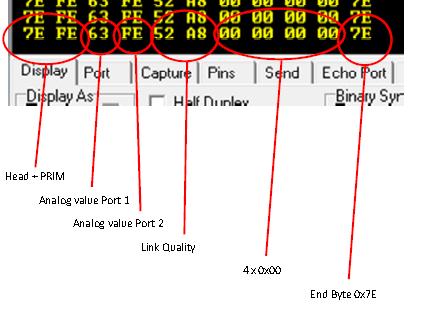
The fourth byte is changed into 0xFE ; this is when the analog voltage on port A2 is almost 3,3V [hence it should be 0xFF when de voltage is 3,3V]. There are different types of transceivers available. The one used in the first experiment has only the capability to send back two analog voltages and link quality information. Additional threshold alarm settings are available too when required. At this moment alarm settings falls out of the scope.
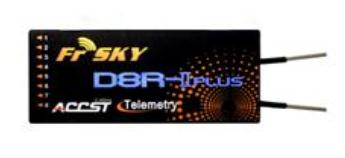
A D8R-II transceiver was used for the second experiment. The picture below shows this transceiver. This transceiver is capable of processing two analog input, link quality and 6
extra user bytes. I wrote a program to send some sample bytes to this serial input port.
uint8_t FrSkyBuffer_USERDATA[6]={0xAA,0xBB,0xCC,0xDD,0xEE,0xFF}; This will initalize 6 bytes of user data, containing the values 0xAA to 0xFF. The HW setup used for this experiment is shown here.
The advantage of having user bytes is that you can define your own data representing one of these 6 bytes. It may also contain more than 6 bytes, like GPS data for instance. But first some basic tests to UNDERSTAND the mechanism behind before going any further.